



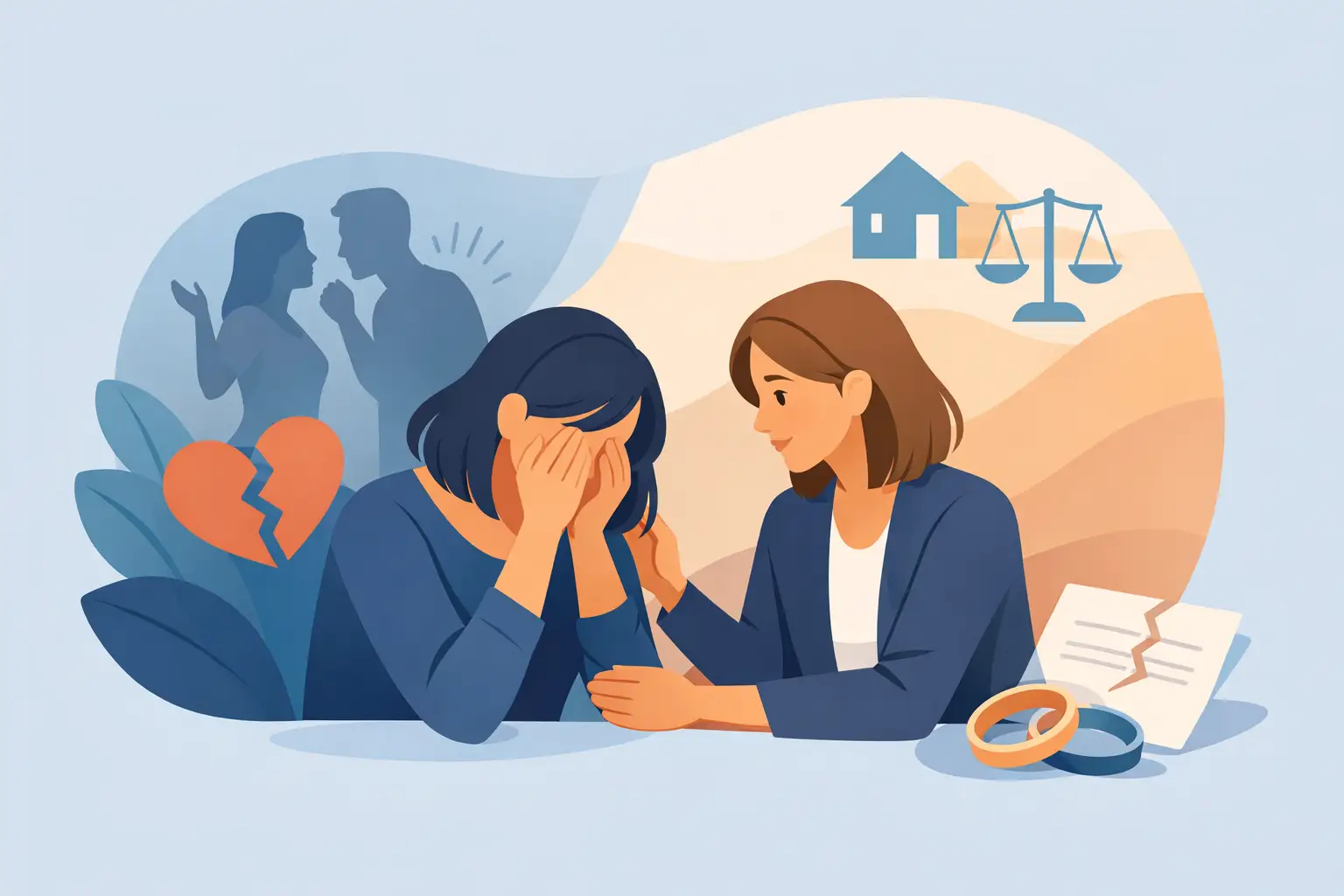

Some of the hardest moments in divorce do not happen in court. They happen at 10 p.m. when the house is quiet, your phone is full of unanswered questions, and your mind keeps replaying the same conversation. That is why emotional support during divorce matters so much. It is not extra help. For many people, it is what keeps the process from becoming completely overwhelming.
Divorce affects more than your schedule, finances, or living arrangements. It can shake your confidence, disturb your sleep, and make even simple choices feel unusually heavy. People often assume they should just stay strong and push through it. But divorce has a way of wearing people down slowly. When that happens, support is not a luxury. It becomes part of how you keep functioning.
Why emotional support during divorce matters
When you are under emotional strain, your decision-making changes. You may feel tempted to reply too fast, agree to something you do not fully understand, or avoid important tasks because you simply cannot handle one more thing. Emotional support creates a buffer between what you feel in the moment and what you choose to do next.
That does not mean support removes pain. It means you have someone or something helping you stay grounded while the pain moves through. Sometimes that is a trusted friend who listens without escalating things. Sometimes it is a therapist. Sometimes it is a divorce coach who understands how emotional stress can interfere with the practical side of the process and helps you stay organized and steady.
The right support can also reduce shame. A lot of people going through divorce feel embarrassed, even when the marriage has clearly been struggling for a long time. They may worry about what family will think, how their children are coping, or whether they somehow failed. Shame tends to make people isolate, and isolation usually makes distress worse. Support interrupts that cycle.
What real support looks like
Not all support feels supportive. Some people mean well but make everything harder. They push you to act quickly, turn every conversation into an attack on your spouse, or project their own divorce story onto yours. That may feel validating for a minute, but it can leave you more anxious, angry, and confused afterward.
Real support usually feels calmer than that. It gives you room to feel what you feel without losing sight of what needs to happen next. It helps you slow down before sending the text you might regret. It reminds you to eat, sleep, gather documents, and take the next step instead of trying to solve your entire future in one night.
Good emotional support during divorce often includes a few simple qualities. It is patient. It is consistent. It does not pressure you to perform strength. It helps you separate immediate feelings from long-term decisions. Most of all, it helps you feel less alone.
The people who can help, and how they help differently
Friends and family can be a lifeline, especially when they are able to listen without taking over. The trade-off is that loved ones are emotionally involved too. They may be protective of you, which is understandable, but that can make it hard for them to stay balanced.
A therapist can help you process grief, anger, fear, and identity shifts. If your divorce is stirring up old wounds, panic, depression, or deep patterns in relationships, therapy can be especially valuable. That kind of support focuses on your emotional health, not the paperwork or logistics.
A divorce coach or consultant can be helpful when your emotions and the process are colliding. Many people do not need legal representation for every part of an uncontested divorce, but they do need calm, responsive guidance to stay organized, think clearly, and keep moving. That is different from legal advice. It is practical and emotional support centered on helping you navigate the process in a more steady way.
If children are involved, a parenting counselor or family therapist may also help. Kids do not need perfect parents during divorce. They need stable ones. If support helps you become less reactive and more consistent, that benefit reaches them too.
Signs you need more support than you have right now
A lot of adults minimize their own distress during divorce because they are focused on getting through it. But there are signs that your current support system may not be enough.
If you are struggling to sleep for weeks, crying every day without relief, missing work, forgetting basic tasks, or feeling constantly panicked, it may be time to add more support. The same is true if every conversation about the divorce sends you into a spiral, or if you keep making avoidant choices because you feel too flooded to deal with anything.
You do not have to wait until you hit a breaking point. Needing support does not mean you are weak or incapable. It usually means you are carrying too much without enough room to set it down.
Small ways to create emotional steadiness
You may not be able to fix the divorce today, but you can reduce the emotional chaos around it. That starts with lowering the pressure you put on yourself.
Try narrowing your focus to the next one or two decisions instead of the next six months. People in distress often reach for certainty, but divorce rarely offers that right away. What you can do is create short-term steadiness. Keep a simple written list of what actually needs your attention this week. Limit how often you reread upsetting messages. If possible, do not have major divorce conversations when you are exhausted.
It also helps to choose one or two safe people instead of telling everyone everything. Repeating your story over and over can leave you drained. Selective support is often better than constant exposure.
If your thoughts are racing, grounding matters more than motivation. Drink water. Step outside. Eat something with protein. Put your phone in another room for twenty minutes. These actions sound small because they are small, but when your nervous system is overloaded, small things are often what bring you back.
Emotional support and practical divorce decisions
One reason support matters so much is that emotional overwhelm can distort practical judgment. You may feel pressure to be agreeable just to end the conflict, or pressure to fight over everything because you are hurt. Neither reaction is unusual. Both can create problems later.
Support helps you pause long enough to ask better questions. Am I agreeing because this makes sense, or because I am exhausted? Am I refusing because this is unfair, or because I want my pain to be seen? Those are not easy questions, but they can protect you from making decisions based only on the emotion of the hour.
For people moving through an uncontested divorce, this balance is especially important. A calm process still carries grief. Just because you and your spouse are not battling in court does not mean the experience is easy. Many people in that situation feel like they should be handling it better because it is more cooperative. That is not how human emotions work. Even a relatively peaceful divorce can feel deeply sad and disorienting.
When support needs to be bilingual, local, or culturally comfortable
Support works better when you can speak freely. For some Texans, that means having support in Spanish as well as English. For others, it means talking with someone who understands the pace and pressure of divorce in a local context without making the process feel cold or formal.
Comfort matters. If you are constantly translating your emotions, your family dynamics, or your practical concerns, you may hold back the very things that need attention. The best support often feels simple. You do not have to explain every detail just to be understood.
That is one reason many people look for guidance that is human first. At The Texas Divorce Consultant, that kind of support is centered on responsiveness, compassion, and practical help for people who need steadiness without the atmosphere of a law office. For many clients, being able to reach out, ask a question, and feel heard makes an already painful season more manageable.
You are allowed to need care while you are being strong
There is a version of strength that looks quiet from the outside. It is not pretending you are fine. It is answering the next email even though your heart is heavy. It is showing up for your kids while grieving. It is asking for help before the pressure turns into collapse.
Divorce changes people. But support can change how you move through that change. You do not have to handle every emotion perfectly, and you do not have to walk through this alone. Sometimes the next right step is not solving the whole situation. Sometimes it is simply letting someone help you stay steady until the path becomes clearer.