



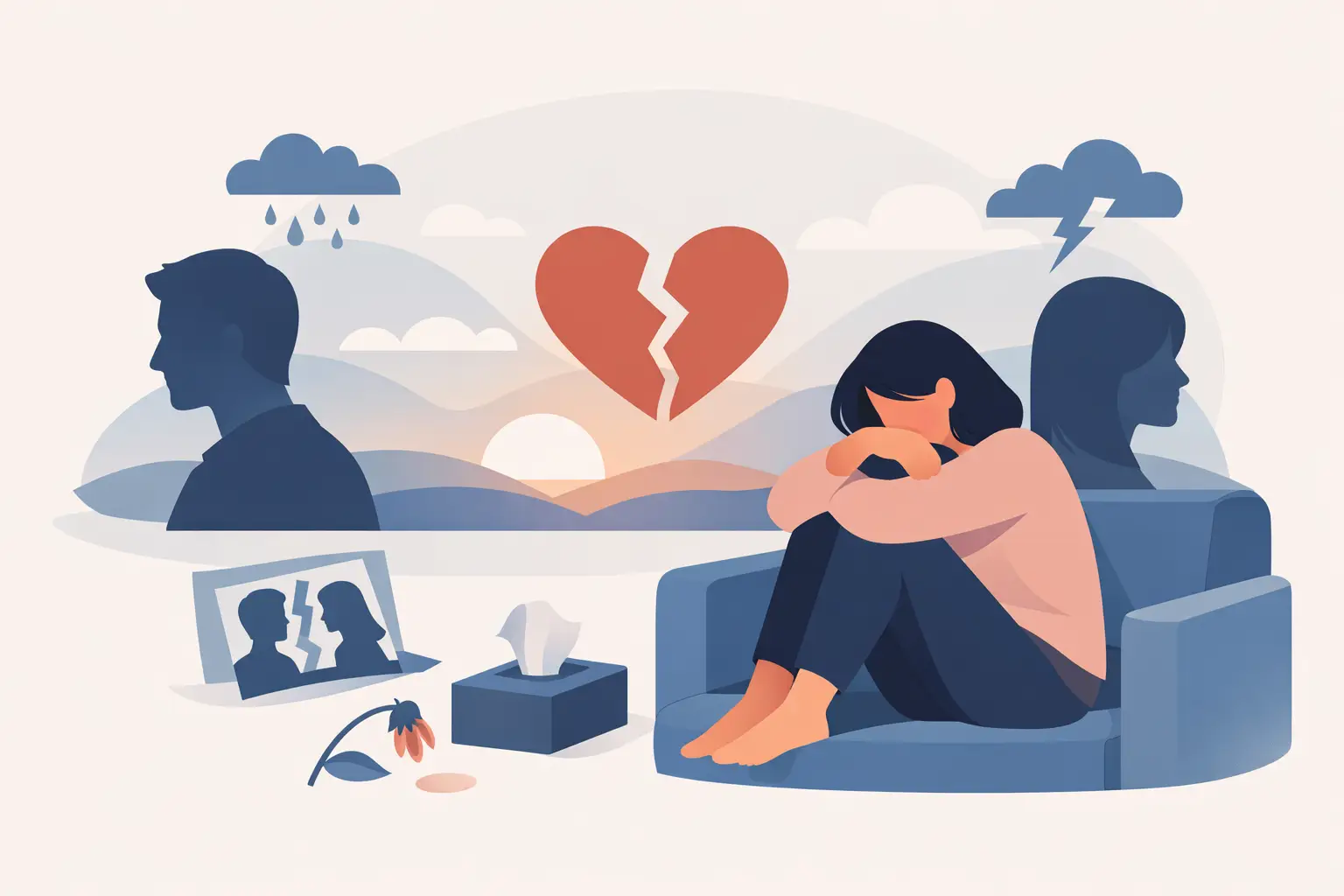

Some days, divorce feels less like one event and more like a hundred small losses stacked on top of each other. You might be grieving the relationship, the routine, the home you expected to keep, or the future you thought was settled. If you are wondering how to get through a divorce emotionally, the first thing to hear is this: there is nothing strange or weak about how hard this feels.
Divorce can make even simple decisions feel heavy. A text message from your spouse can change your whole day. A court deadline can stir up panic. Even when the divorce is the right choice, the emotional impact can still be intense. Relief and grief often show up together, and that can be confusing if you expected to feel only one thing.
How to get through a divorce emotionally when everything feels raw
In the early stage, most people want one of two things. They either want the pain to stop immediately, or they want to understand exactly how long it will last. Unfortunately, emotions do not usually move in a straight line. Some mornings you may feel clear and capable. By afternoon, a memory or financial worry can knock the wind out of you.
That does not mean you are going backward. It usually means your mind and body are trying to adjust to a major disruption. Divorce affects your sense of safety, identity, and control. It is normal to feel anxious, distracted, sad, angry, numb, or all of those in the same week.
What helps most at this stage is lowering the pressure to “handle it perfectly.” You do not need to be calm all the time. You do not need to have a polished explanation for friends and family. You do not need to make every big decision while your emotions are running high. Emotional survival comes first. Clarity often follows later.
Let the truth be mixed
One reason divorce is so emotionally exhausting is that the truth is rarely simple. You can miss someone and still know the marriage needs to end. You can feel guilty without being at fault for everything. You can be heartbroken and still feel moments of peace.
Many people get stuck because they think healing requires a clean emotional story. It usually does not. It depends on the marriage, the conflict, the children, the finances, and the level of trust that existed before the split. Trying to force everything into a neat label can make you feel worse.
A better approach is to allow complexity. If today feels messy, let it be messy. If you are relieved one hour and grieving the next, that is still honest. Emotional recovery often begins when you stop arguing with what you feel.
Protect your nervous system, not just your schedule
During divorce, people often focus on paperwork, logistics, and deadlines while ignoring what the stress is doing to their body. But emotional pain is physical too. You may notice poor sleep, tight shoulders, a racing heart, stomach issues, brain fog, or a short temper. These are not small side effects. They shape how you think and cope.
That is why the basics matter more than usual. Eat regular meals even if your appetite is off. Drink water. Try to sleep on a schedule. Step outside every day, even for ten minutes. Limit how often you reread painful texts or replay arguments in your head. These things can sound simple, but when your system is overloaded, simple is powerful.
If your emotions are escalating quickly, reduce stimulation before you try to solve the problem. Pause the conversation. Put the phone down. Take a walk. Sit in your car and breathe before going into the house. A calmer body gives you a better chance at a calmer response.
Be careful who gets access to your pain
Not everyone in your life will know how to support you well. Some people rush you. Some make the divorce about their own opinions. Some want updates but do not actually help you feel steadier. In a vulnerable season, that kind of input can leave you more overwhelmed.
Choose a small circle of safe people. These are the ones who can listen without escalating the conflict, pressuring you, or turning every conversation into gossip. Support does not always come from the loudest voice. Often it comes from the person who helps you think clearly after a hard day.
If you need more support than friends and family can give, that is not a failure. It is wisdom. A counselor, therapist, faith leader, or divorce coach can offer steady perspective when emotions and logistics are getting tangled together. For many people, that outside support makes the difference between constant crisis and gradual stability.
How to get through a divorce emotionally without making it worse
Pain can lead people into patterns that feel relieving in the moment but create bigger problems later. You may want to send the long late-night text, check social media, argue over every small issue, or make major financial choices just to regain a sense of control. That urge is understandable, but it often raises the temperature.
When possible, slow the cycle down. You do not have to answer every message immediately. You do not have to explain yourself to everyone. You do not have to prove who was right in every conversation. Sometimes emotional strength looks less like confrontation and more like restraint.
This is especially true if children are involved. Kids often notice more than adults realize. They may not understand the legal process, but they feel tension, tone, and instability. Protecting them emotionally does not mean pretending everything is fine. It means being thoughtful about what they hear, what they carry, and how often they are pulled into adult conflict.
Give yourself structure when emotions feel shapeless
One of the hardest parts of divorce is that the feelings can blur the whole day. If you do not create some structure, grief and anxiety can fill every open space. A simple rhythm can help more than people expect.
Wake up at the same time. Keep one or two non-negotiable routines. Decide when you will deal with divorce-related tasks and when you will stop for the day. If your mind starts spiraling at night, keep a notepad nearby and write the worry down instead of trying to solve it at midnight.
This does not erase the sadness. It gives the sadness boundaries. That matters because emotional recovery is not just about feeling better. It is also about rebuilding your ability to function while you heal.
You do not need to be fully healed to move forward
A lot of people think they must wait until they feel completely strong before making practical decisions. Real life usually does not work that way. Sometimes healing happens while you are still gathering documents, answering emails, and figuring out your next step.
That is where calm support can matter so much. If the process itself is creating emotional overload, having someone help you stay organized and grounded can reduce the sense that everything is falling apart at once. For people in Texas, especially in uncontested cases, practical divorce support may help lower confusion and pressure without the formality or cost of hiring a full legal team for every step. The key is making sure any support stays within proper non-attorney guidance and does not replace legal advice when legal advice is needed.
Watch for the difference between pain and danger
Most emotional pain after divorce is painful but temporary. Still, there are times when you should treat what you are feeling as urgent. If you are unable to function for an extended period, having panic that will not let up, using substances to cope, or having thoughts of harming yourself, please seek immediate professional help from a licensed mental health provider or emergency support in your area.
There is no prize for white-knuckling your way through a crisis alone. Real strength includes asking for help sooner than you think you should.
The goal is not to erase the loss
Divorce changes people. Even when healing comes, you may still carry disappointment over what happened. But emotional recovery is not about pretending the marriage never mattered. It is about reaching a point where the pain no longer runs your whole life.
Over time, many people notice small signs of progress before big ones. They laugh without forcing it. They get through a day without checking their phone in fear. They sleep better. They make a decision without spiraling. They start to believe that peace is still possible.
If that feels far away today, that is okay. You do not have to finish the whole emotional journey this week. Just keep choosing the next steady step, the next honest conversation, the next act of care for yourself. Sometimes that is how the path becomes visible again.