



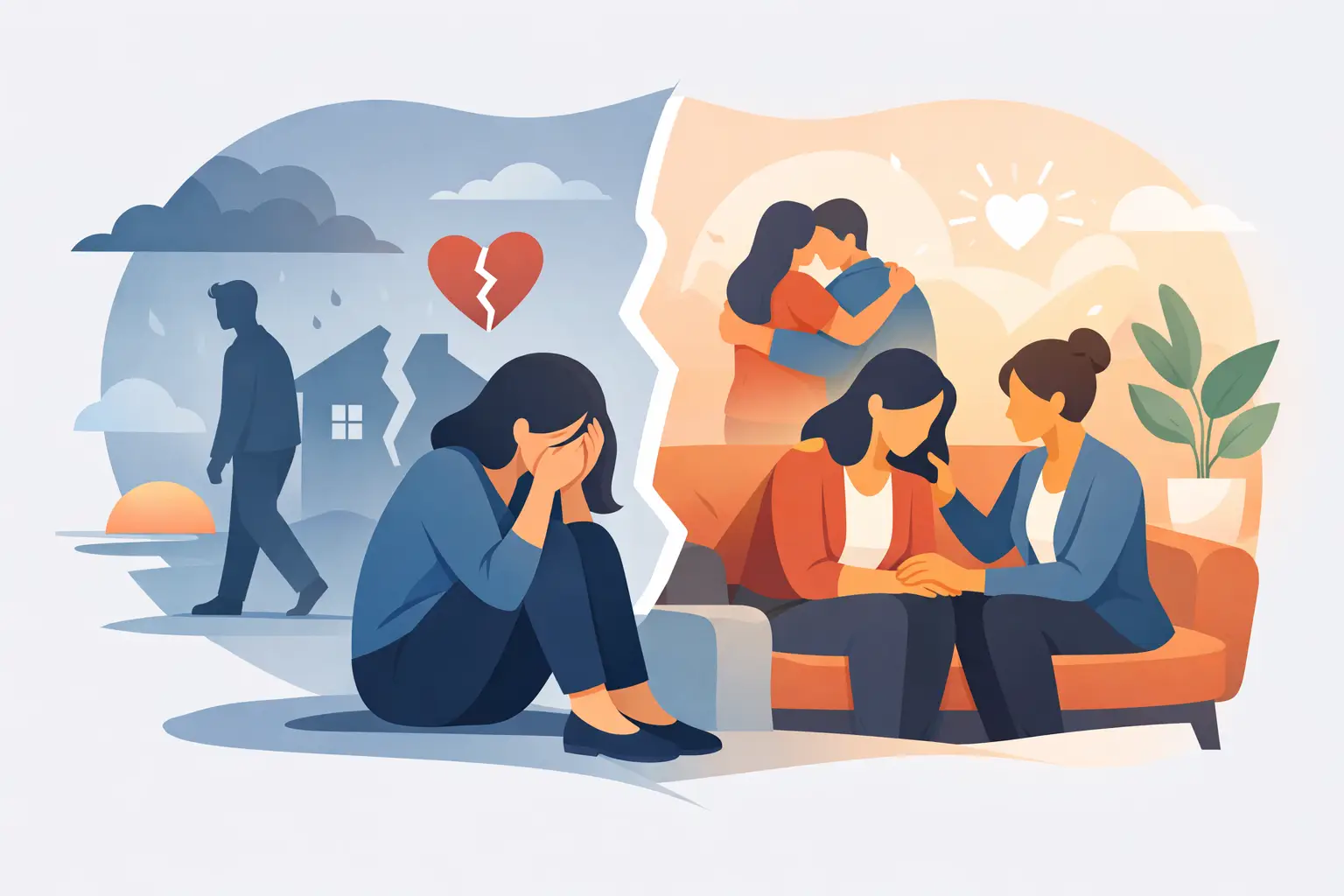

Some people expect divorce to feel like one big emotion – sadness, anger, relief. What usually happens instead is much messier. The emotional effects of divorce can change by the hour. You may feel calm while filling out paperwork, then completely unravel when you see an old photo, hear a song in the car, or realize you have to explain the situation to your children.
That emotional whiplash does not mean you are handling divorce badly. It usually means you are living through a major loss and a major life reorganization at the same time. Even when the divorce is the right decision, it can still feel deeply painful. Even when the conflict has gone on for years, the finality can still hit hard.
Why the emotional effects of divorce feel so intense
Divorce is not just the end of a relationship. It can affect your home, your finances, your routines, your identity, your parenting schedule, and your sense of stability. That is why people often feel emotionally overloaded even when they are trying to stay practical.
There is also a mental strain that many people do not expect. Simple decisions can suddenly feel exhausting. You may have to think about documents, schedules, accounts, living arrangements, and future plans while your body is still reacting to stress. When people say, “I can’t think straight,” they are often describing a very real combination of grief, fear, and decision fatigue.
For some, the hardest part is the loss of the future they pictured. You may not only be grieving the relationship itself. You may be grieving holidays that will look different, financial plans that need to be rewritten, or the version of family life you hoped to keep.
Common emotional effects of divorce
There is no single right way to feel during divorce. Still, certain emotional patterns show up again and again.
Grief that comes in waves
Grief after divorce is rarely neat. One day you may feel productive and clearheaded. The next day you may struggle to get out of bed. This is common because divorce tends to bring repeated reminders of what has changed. A court date, a move, or a new parenting arrangement can trigger another wave.
People sometimes judge themselves for grieving a marriage they wanted to leave. But grief is not proof that the decision was wrong. It is often proof that the relationship mattered.
Anxiety about what comes next
Anxiety often grows in the space between decisions and outcomes. You may wonder how the bills will get paid, how often you will see your children, how you will manage alone, or whether you are missing something important in the process. That uncertainty can make everyday life feel shaky.
This is one reason practical support matters so much. Emotional stress tends to rise when the process feels confusing. When the next step is clearer, many people feel more grounded.
Anger, resentment, and replaying the past
Anger is common during divorce, especially when there has been betrayal, secrecy, financial strain, or long-term conflict. Some people feel explosive anger. Others carry a quieter resentment that shows up as irritability, numbness, or constant mental replay.
Anger is not always harmful. Sometimes it helps people recognize what was not acceptable and begin setting better boundaries. But when anger drives every conversation or every decision, it can make an already hard process even harder.
Relief mixed with guilt
Not everyone feels only sadness. Many people feel relief, especially if the marriage has been tense, lonely, or emotionally draining for a long time. Then guilt shows up right behind it. People ask themselves, “Why do I feel lighter when this is supposed to be heartbreaking?”
Mixed feelings are normal. Relief and grief can exist at the same time. So can love and disappointment. Human emotions are rarely tidy during divorce.
Shame and isolation
Divorce can make people pull back from friends, family, or church communities because they do not want questions, opinions, or judgment. That isolation can deepen emotional pain. Shame also tends to grow in silence. People may blame themselves for the divorce, for staying too long, for leaving too soon, or for not seeing problems earlier.
In reality, most divorces involve years of stress, complexity, and private struggles that outsiders never fully see. A compassionate support system can make a real difference here.
What divorce stress can look like day to day
Emotional distress does not always show up as crying. Sometimes it looks like poor sleep, brain fog, short temper, stomach issues, procrastination, or feeling frozen when simple tasks need to be done. You may lose focus at work. You may have trouble answering texts. You may bounce between overfunctioning and shutting down.
If children are involved, the stress can feel even more layered. Many parents are carrying their own pain while trying to protect their kids from adult conflict. That can create a constant internal pressure to stay composed when you feel anything but composed.
This is also where people can become hard on themselves. They tell themselves they should be stronger, calmer, faster, or more organized. But divorce often pushes people beyond their normal coping capacity. Needing support does not mean you are weak. It means the situation is heavy.
What helps with the emotional effects of divorce
The goal is not to force yourself to feel fine. The goal is to create enough steadiness that you can move through the process without being swallowed by it.
One of the most helpful things is reducing unnecessary confusion. When the process is less overwhelming, your emotions often become more manageable too. That does not erase grief, but it can lower panic. If your divorce is uncontested, having calm, practical guidance with forms, timelines, and next steps can relieve a surprising amount of emotional pressure because you are not trying to figure everything out alone.
Routine helps more than people expect. Eating on a schedule, sleeping as consistently as you can, walking, and limiting late-night spiraling all sound simple, but they support your nervous system when life feels unstable. Small structure matters.
It also helps to choose a few safe people instead of telling everyone everything. Not every friend knows how to support someone in divorce. Some bring judgment. Some bring gossip. Some make everything louder. Look for people who help you feel clearer, not more agitated.
If your thoughts feel nonstop, try getting them out of your head and onto paper. Write down questions, tasks, worries, and decisions that need to be made. Often the brain treats everything like an emergency when it is all floating around at once. Seeing it clearly can lower the intensity.
And if you are co-parenting, remember that emotional regulation is not the same as pretending. Children do not need a perfect parent. They need a steady one. Taking a pause before responding, keeping adult conflict away from them, and getting support for yourself are all forms of care.
When emotions start affecting your ability to function
Some distress is expected in divorce. But there are times when extra support is needed. If you are not sleeping for days, cannot get through basic responsibilities, feel hopeless, or find yourself thinking about harming yourself, that is a sign to reach out for immediate mental health support.
There is no prize for pushing through alone. Coaching and practical divorce support can help reduce overwhelm and bring structure to the process, while licensed mental health professionals can help when anxiety, depression, trauma, or crisis symptoms run deeper. Those kinds of support do different jobs, and both can be valuable.
For many people, the best path is not choosing between emotional support and practical guidance. It is having the right kind of help for each part of the problem.
The part most people do not see coming
One of the quieter emotional effects of divorce is how long adjustment can take. Even after paperwork is filed and major decisions are made, your body and mind may still be catching up. That does not mean you are stuck. It means healing is often slower than the legal process.
Over time, many people do find their footing again. They become more confident with money, parenting, routines, and decision-making. The life ahead may not look like the one you planned, but that does not mean it cannot become peaceful, stable, and good.
If you are in the middle of divorce right now, try not to measure your progress by how calm you feel on any one day. Measure it by whether you are taking the next right step, asking for help when you need it, and giving yourself room to be human while your life changes.